Michaels
Michaels
Michaels
Industry
Industry
Retail | Hobby & Craft


The project:
Contributed to Michaels’ rapid omnichannel shift during COVID, supporting curbside pickup and buy-online-pickup-in-store (BOPIS) at scale
Embedded with store teams to understand real-world inventory flow, fulfillment constraints, and customer expectations
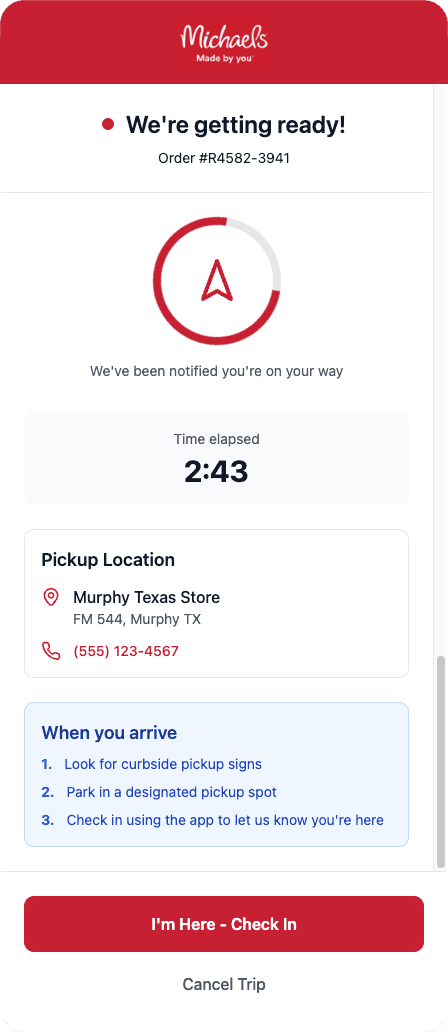
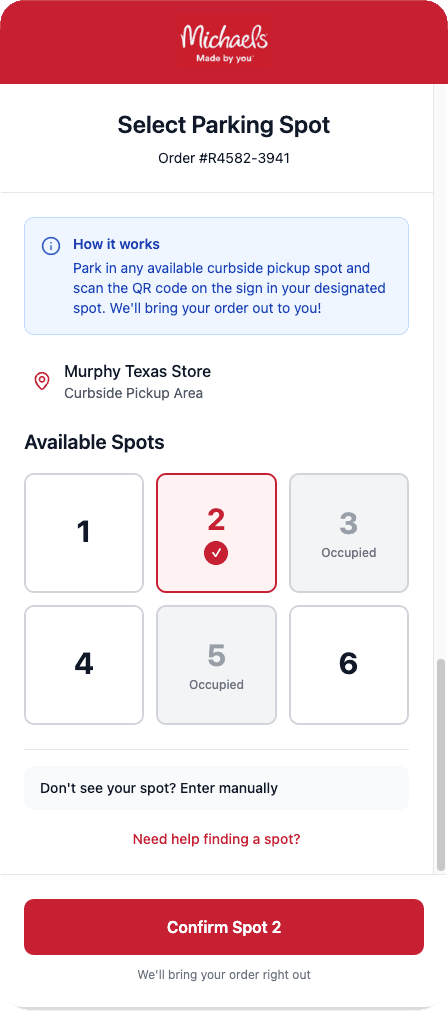
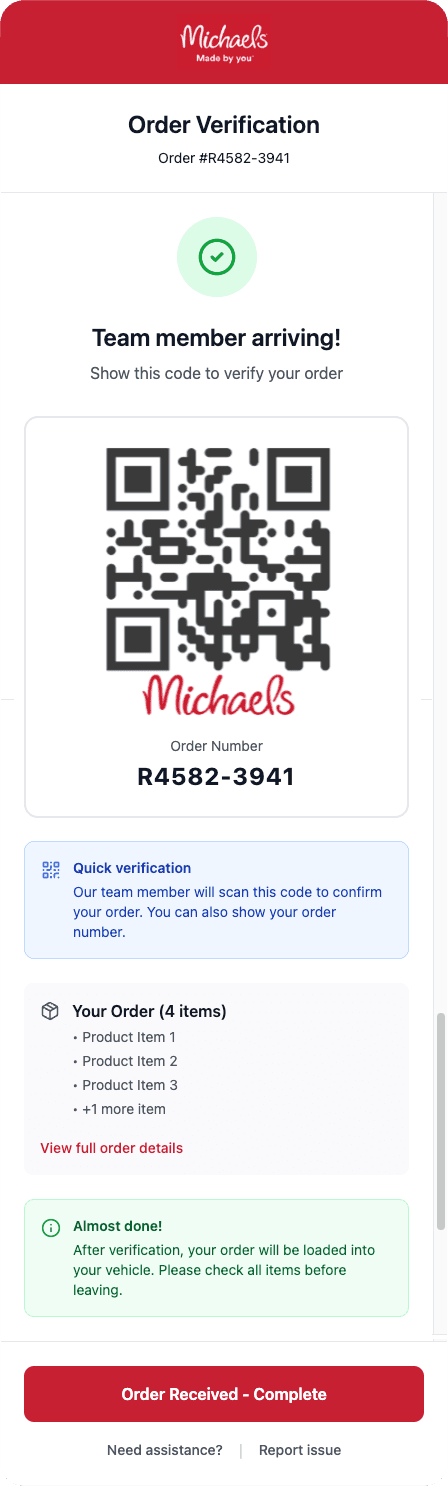
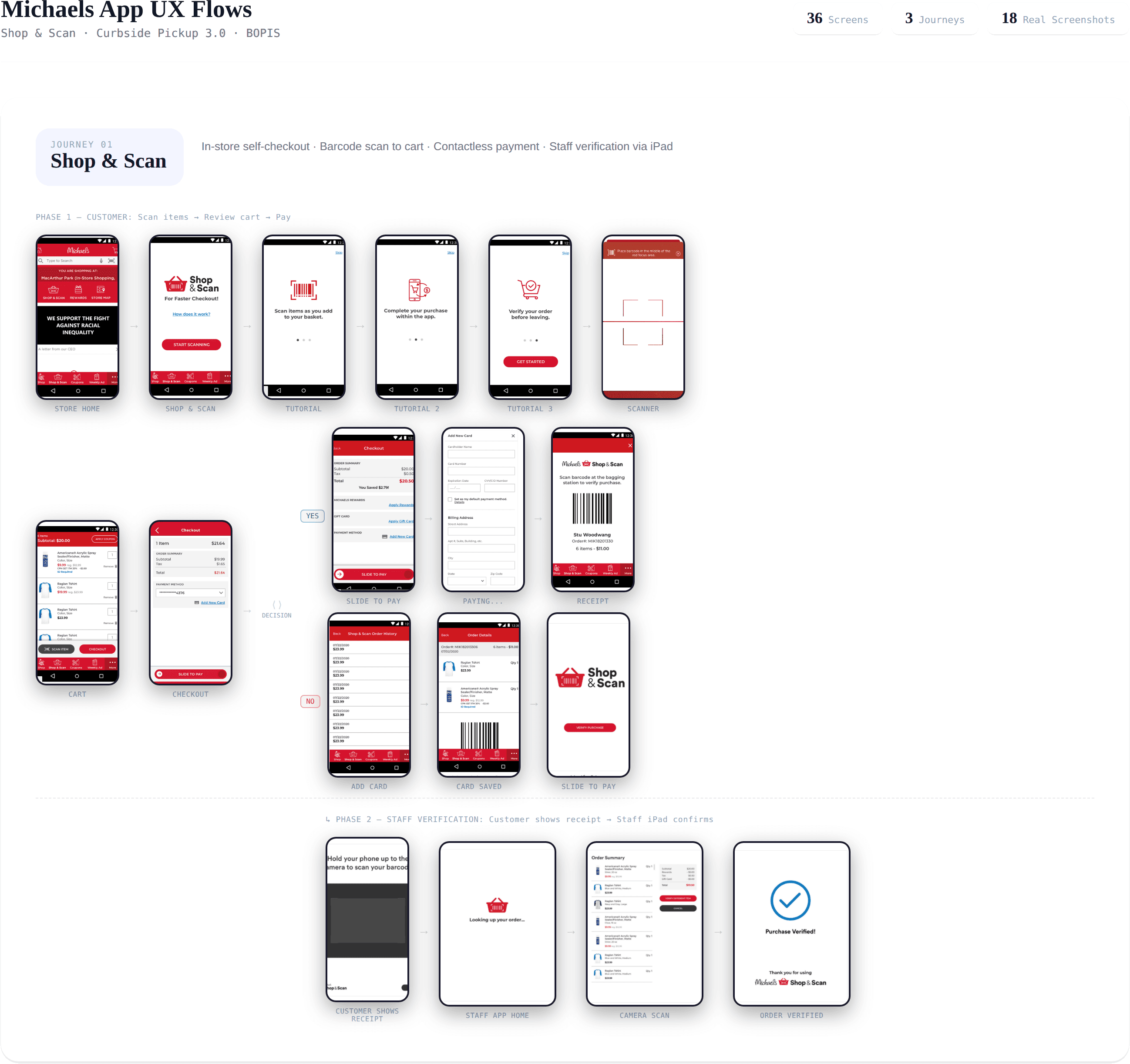
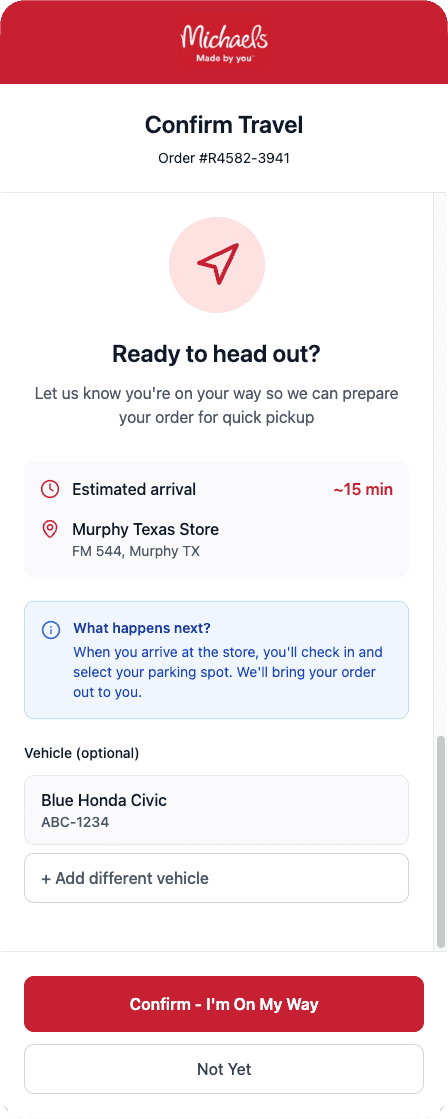
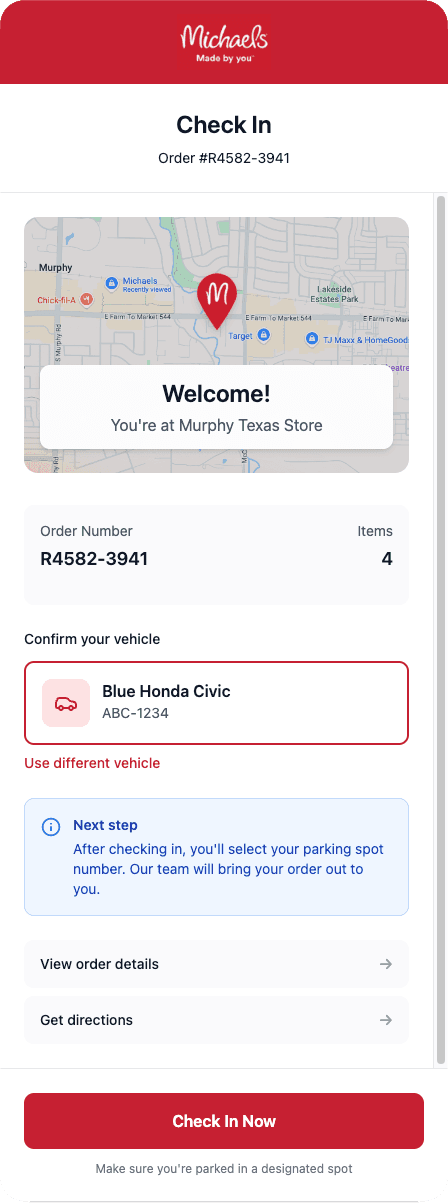
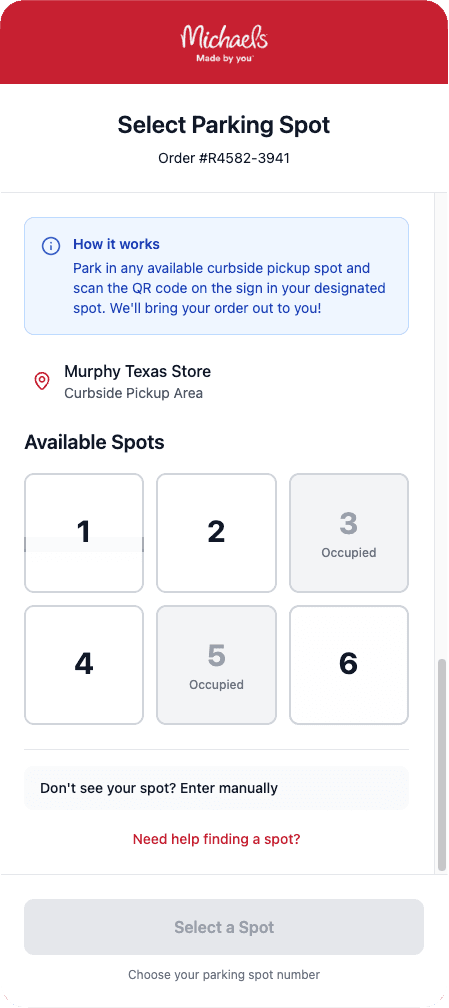
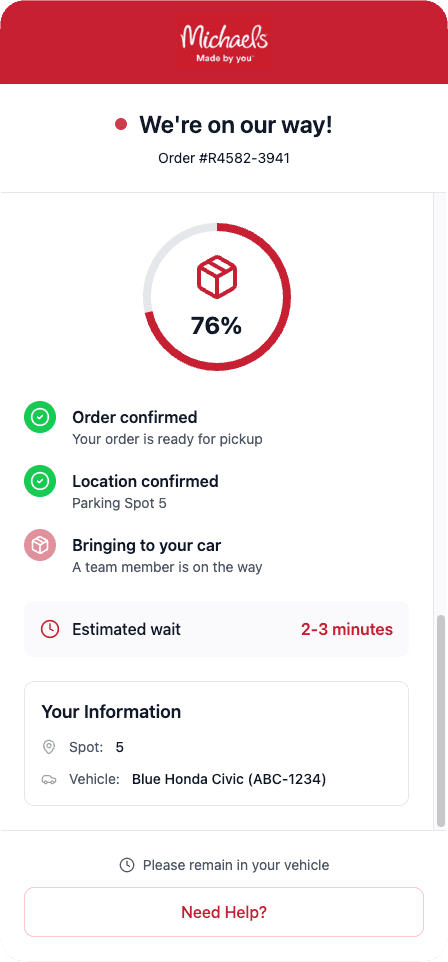
Helped design service flows that coordinated mobile app behavior, geofencing, store operations, and associate workflows
Balanced speed, safety, and reliability during a period of extreme operational uncertainty
Ensured digital experiences aligned with how stores actually functioned under pressure
Getting into the project:
Michaels’ existing systems and store processes were not designed for the sudden scale and urgency of contactless fulfillment. Inventory accuracy, order timing, associate workflows, and customer communication were often misaligned, leading to confusion, delays, and frustration on both sides of the counter. Customers lacked clear signals about order readiness, while store teams struggled to manage fulfillment alongside in-store demands.
Enable reliable curbside pickup and BOPIS experiences under pandemic conditions
Align mobile app behavior with store-level realities and constraints
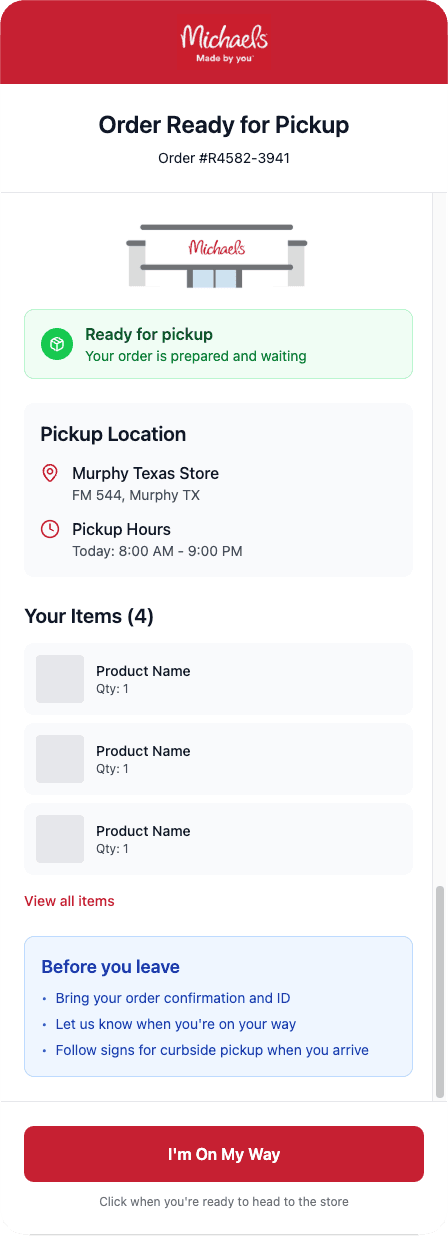
Reduce customer uncertainty around order readiness and pickup timing
Minimize associate cognitive load during fulfillment and handoff
Improve coordination between inventory systems, store operations, and customer communication
Senior UX / Product Design Lead embedded with cross-functional teams, contributing to research, service design, workflow mapping, and experience refinement across digital and in-store touchpoints.
Conducted in-store observation and interviews with associates and customers
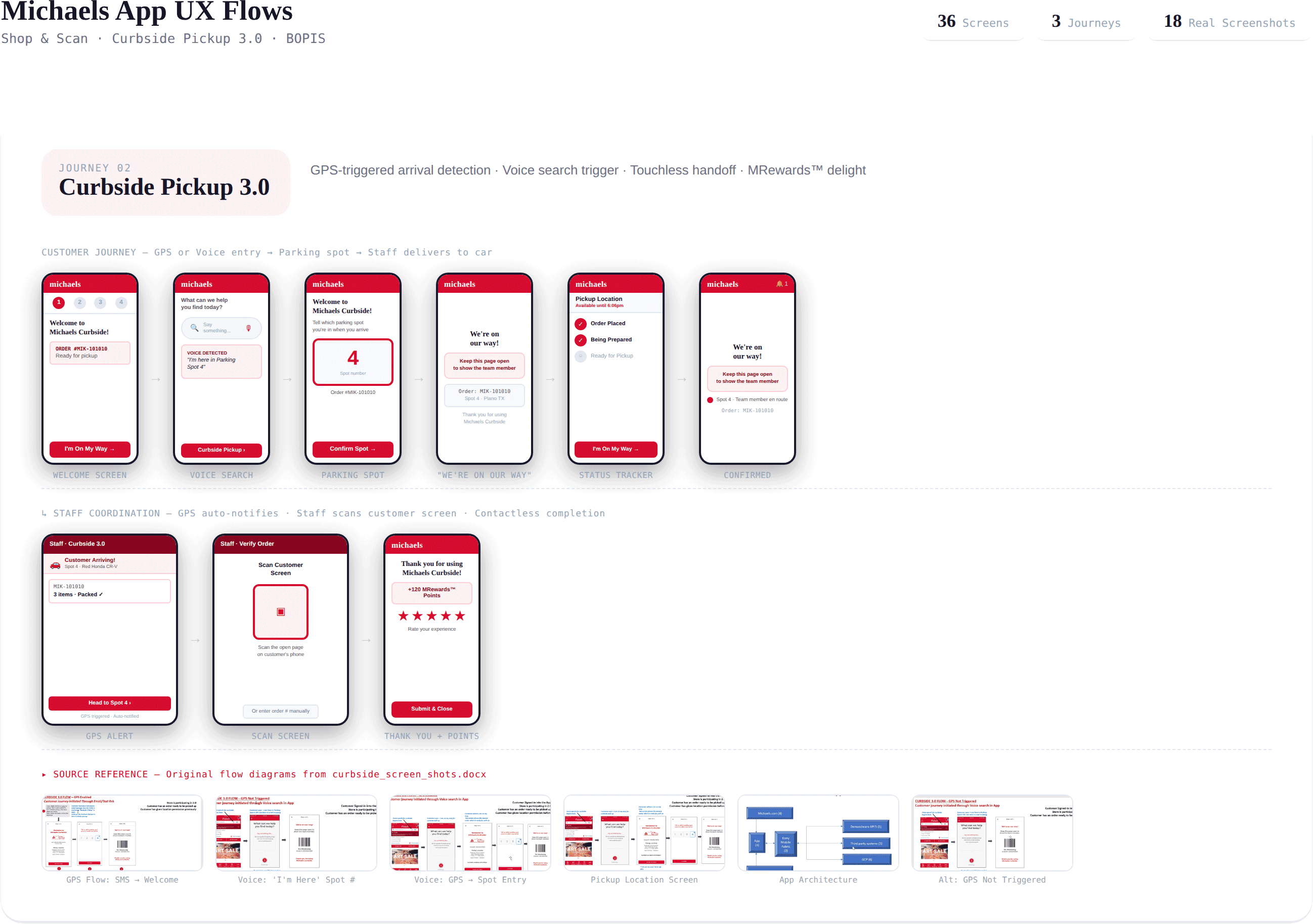
Mapped end-to-end fulfillment journeys from order placement to pickup
Partnered with product and engineering to refine app flows and system behaviors
Evaluated geofencing, notifications, and readiness signaling
Advocated for store-operational realities in digital design decisions
All about the user :
To understand where fulfillment broke down, I spent extended time in Michaels stores observing associates and speaking directly with customers using curbside pickup. Research focused on how inventory moved from delivery to shelf, how orders were picked and staged, and how associates balanced fulfillment alongside in-store service. Rather than relying on abstract personas, insights came from real workflows, real constraints, and moments where digital signals failed to match physical reality.
Inventory systems did not always reflect real-time store conditions, leading to incorrect availability signals and delayed fulfillment.
Customers often lacked clear confirmation of when orders were truly ready for pickup, increasing anxiety and unnecessary store interactions..
Store teams were required to juggle picking, staging, customer handoff, and in-store service without clear prioritization or system support.
Store Associate (Fulfillment-Focused)
Responsible for picking, staging, and handing off orders
Operates under time pressure and safety constraints
Needs clarity, sequencing, and predictable system behavior
Customer (Contactless Pickup)
Wants speed, safety, and certainty
Highly sensitive to unclear instructions or delays
Judges the experience by trust and reliability, not novelty
The journey mapped both customer actions and associate responsibilities across time—highlighting moments where misalignment caused delays, confusion, or repeated communication. This dual-lens approach surfaced where system notifications, geofencing, and readiness states either helped or hindered coordination between digital intent and physical execution.
Successfully place an order online and complete a safe, efficient curbside pickup with minimal uncertainty.
Most breakdowns in the curbside experience were not caused by interface confusion, but by misalignment between inventory accuracy, associate capacity, and the timing of customer-facing notifications. Improving the experience required redesigning coordination across systems and roles - not just refining screens.
Successfully place an order online and complete a safe, efficient curbside pickup with minimal uncertainty.
The project :
Rather than jumping directly to screens, I focused on mapping fulfillment workflows and handoffs across systems and people. This included service blueprints, journey maps, and operational flow diagrams that clarified dependencies between inventory systems, associate actions, and customer-facing signals. These artifacts guided design decisions and helped teams reason about tradeoffs under rapidly changing conditions.
Validation centered on real-world usage rather than formal usability labs. I reviewed flows with store associates, walked through live fulfillment scenarios, and observed curbside pickups in action. Feedback loops focused on timing, clarity, and failure modes—surfacing issues that only appeared under real operational load.
Key insights included:
The cost of premature “ready” notifications
Gaps between geofencing intent and actual associate availability
The need for clearer exception handling when inventory or staffing changed
What This Enabled
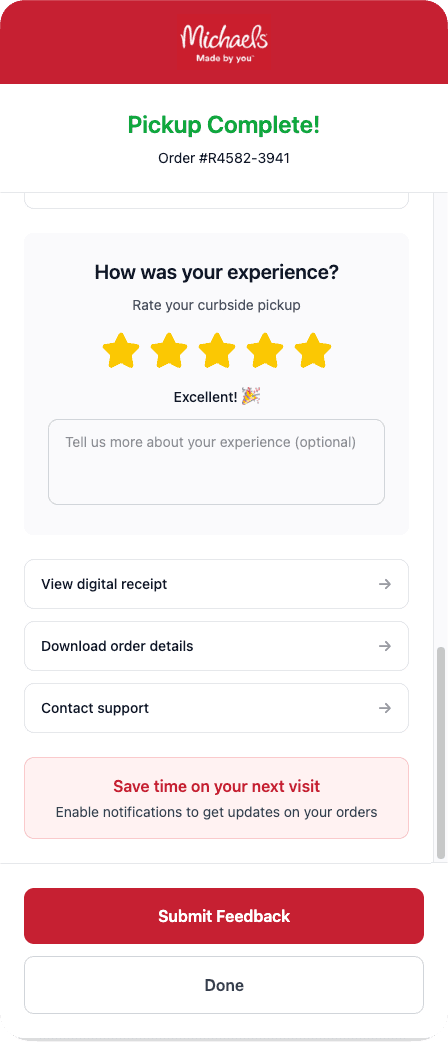
Improved curbside and BOPIS experience flows within the Michaels app
Clearer readiness and notification logic aligned to store workflows
Better coordination between customer intent, system state, and associate action


The project :
This work enabled Michaels to operate curbside pickup and BOPIS at scale during a period of extreme demand and operational uncertainty. Customers experienced clearer expectations and safer, more predictable pickups, while store teams benefited from improved coordination and reduced friction during fulfillment. The effort reinforced the importance of aligning digital intent with in-store reality—especially when systems are under pressure.
Designing for trust requires designing for time, not just moments
• Reducing cognitive load is often more valuable than adding flexibility
• Validation is most effective when it pressure-tests real workflows, not idealized scenarios • Systems that support advisors must reinforce—not replace—the human relationship
• Clear structure early enables better judgment and adaptation later
This project strengthened my conviction that UX work is oftentimes, less about artifact production and more about shaping behavior, coordination, and decision-making across complex systems.